
In 2007, over 100 million people around the world cast their votes to decide which human-made structures deserved a place on the most coveted list in travel. The result was the New Seven Wonders of the World — a roll call of the most breathtaking, historically significant and architecturally extraordinary places on the planet.
We’ve been lucky enough to visit several of them over the years, and we’ve spent a lot of time thinking about this question. But rather than give you our verdict and leave it there, we want to hear from you. More on that in a moment.
First, let’s take a tour of all seven — because each one has a story worth telling.
1. Machu Picchu, Peru
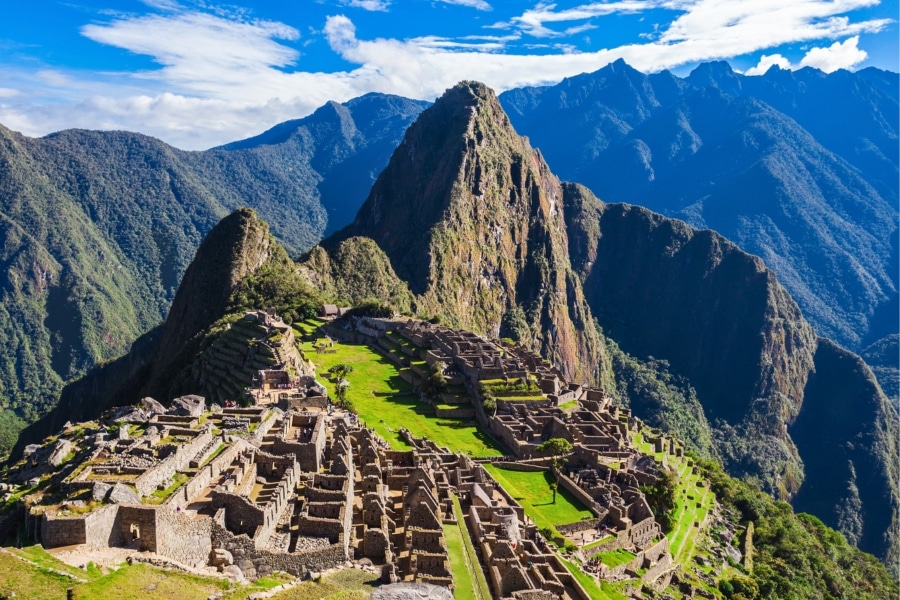
Perched at 2,430 metres above sea level in the Peruvian Andes, Machu Picchu is one of those places that genuinely defies expectation. You can read about it, see the photographs, watch the documentaries — and still nothing quite prepares you for the moment the clouds part and the full scale of this 15th-century Inca citadel reveals itself.
Built around 1450 and abandoned less than a century later during the Spanish conquest, Machu Picchu was unknown to the outside world until American historian Hiram Bingham stumbled upon it in 1911. The site covers roughly 80,000 acres of mountain terrain, with stone temples, agricultural terraces and residential quarters arranged with extraordinary precision — and without the use of mortar, wheels or iron tools.
The classic approach — a four-day trek along the Inca Trail — remains one of the great travel experiences in South America. But the train journey through the Sacred Valley from Cusco is a worthy alternative, and the Aguas Calientes hot springs at the base of the mountain make for a restorative end to the day.
Best for: Hikers, history lovers, and anyone who wants to feel genuinely small.
2. The Great Wall of China
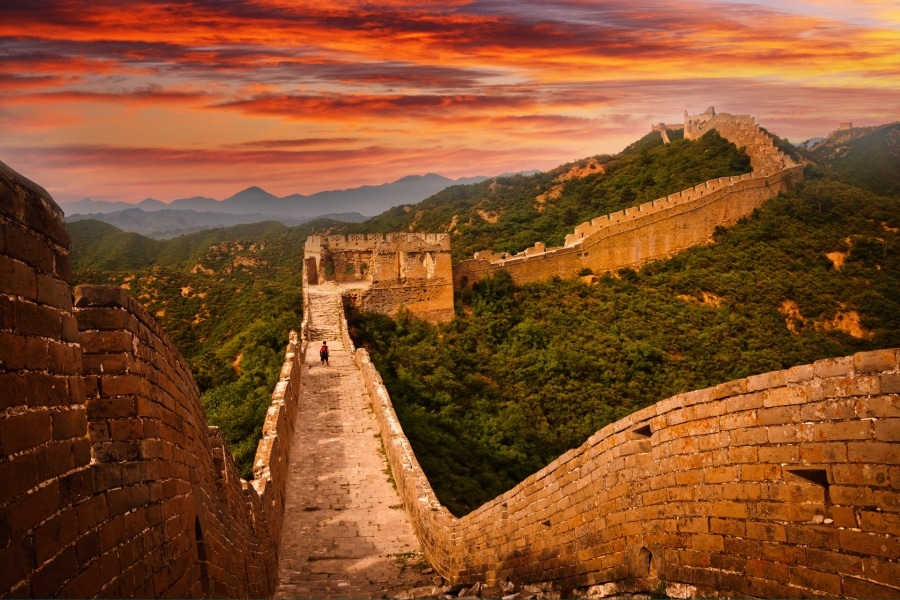
Stretching over 21,000 kilometres across northern China — from the eastern shores of Bohai Bay to the Gobi Desert in the west — the Great Wall is less a single structure than a vast network of walls, towers and fortifications built across more than 2,000 years of Chinese history.
The most visited sections near Beijing (Badaling and Mutianyu) are spectacular but busy. For a more atmospheric experience, the unreconstructed sections at Jiankou or Jinshanling reward those willing to make a little more effort — crumbling watchtowers, wild vegetation reclaiming the stonework, and views that stretch to the horizon with barely another soul in sight.
The wall was never truly a single defensive line so much as a series of regional barriers, expanded and connected over centuries by successive dynasties. Walking a stretch of it, particularly on a clear autumn day, is to walk through layer upon layer of Chinese history.
Best for: Those who want scale — and lots of it.
3. The Colosseum, Rome, Italy
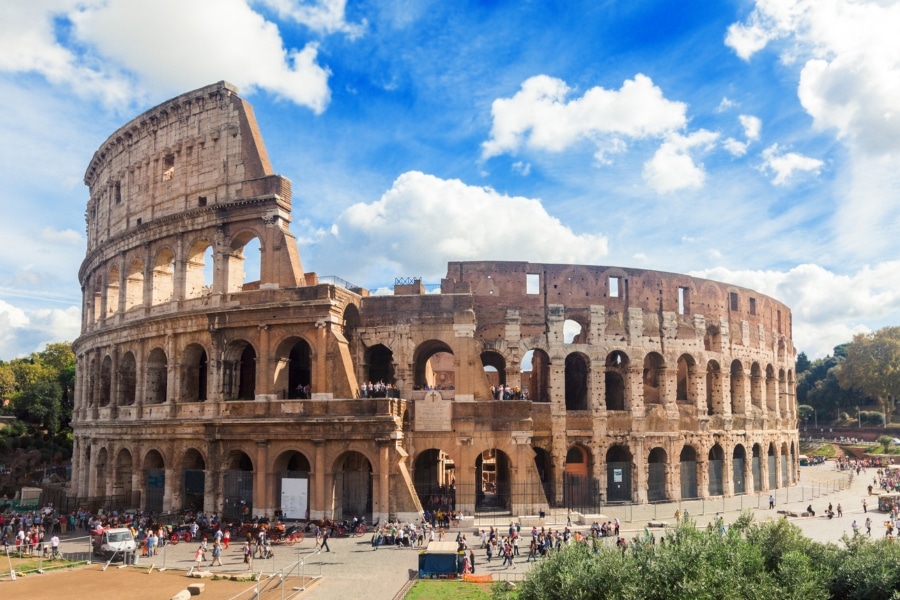
Few buildings in the world carry quite the same weight of history as the Colosseum. Completed in 80 AD under Emperor Titus, this elliptical amphitheatre once held up to 80,000 spectators who came to watch gladiatorial combat, animal hunts and public spectacles on a scale that wouldn’t be matched for over a millennium.
Standing in the arena itself — where the sand once covered a labyrinthine network of tunnels housing animals, gladiators and stage machinery — is genuinely stirring. The engineering is as impressive as anything the ancient world produced, and the fact that it survived two millennia of earthquakes, stone-robbing and neglect makes it all the more remarkable.
Rome, of course, offers considerably more than the Colosseum — the Forum, the Palatine Hill, the Pantheon, and more excellent food than you could eat in a month — but the Colosseum remains the city’s most iconic image for very good reason.
Best for: History enthusiasts, architecture lovers, and first-time visitors to Rome.
4. The Taj Mahal, India
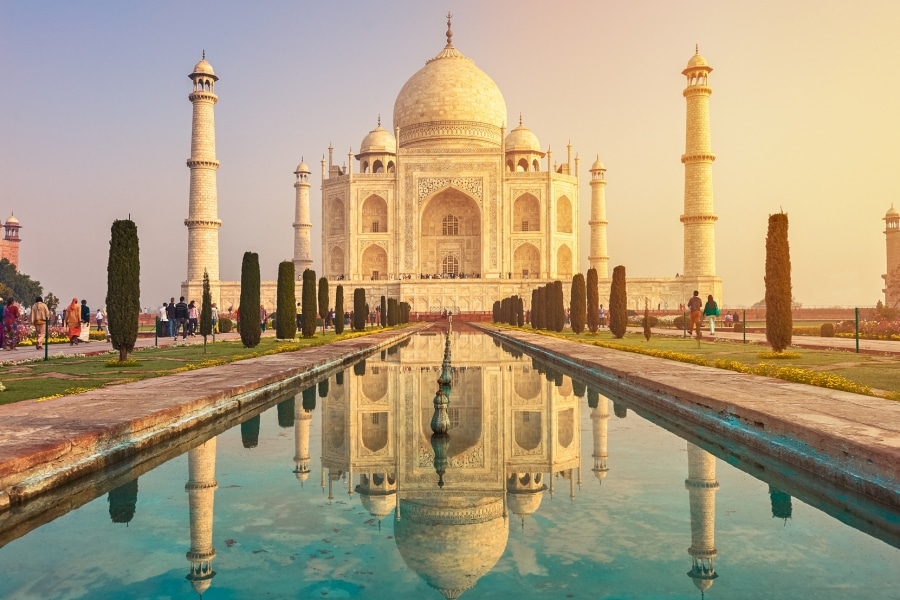
Built between 1631 and 1648 by Mughal emperor Shah Jahan as a mausoleum for his beloved wife Mumtaz Mahal, the Taj Mahal is perhaps the most recognisable building on earth — and one of the very few that lives up entirely to its reputation.
The symmetry is extraordinary. The white marble changes colour with the light — pale gold at dawn, brilliant white at midday, soft rose at sunset, silvery grey by moonlight. The inlaid semi-precious stonework, the calligraphy, the reflecting pool, the surrounding gardens — every element was conceived as part of a unified whole, an expression of grief and devotion rendered in stone.
It’s worth going early, before the crowds arrive, and taking time to walk the full gardens rather than heading straight for the mausoleum. The rear view of the Taj from the riverbank — less photographed and far quieter — is arguably the most beautiful perspective of all.
Best for: Romance, architecture, and a genuinely moving experience.
5. Chichén Itzá, Mexico
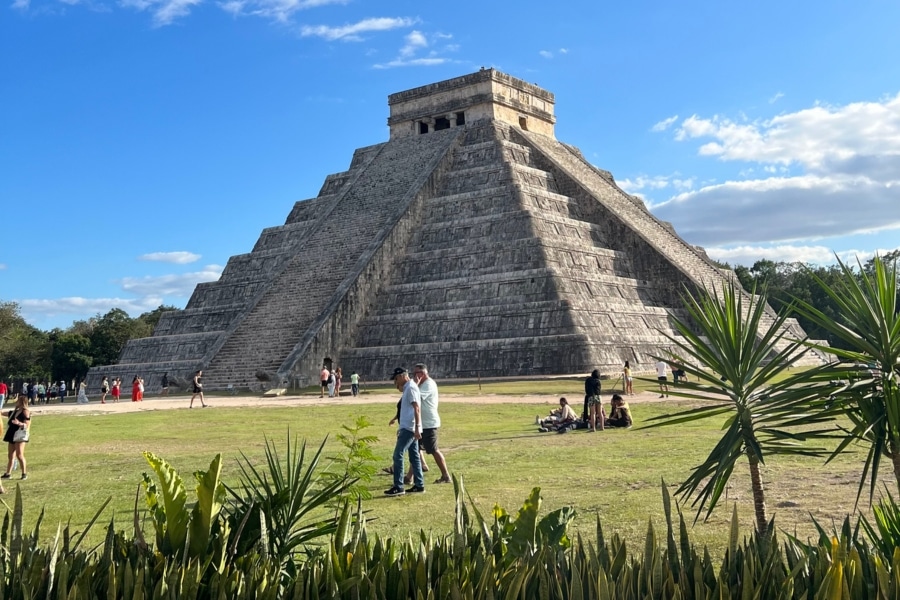
The great Maya city of Chichén Itzá, in the Yucatán Peninsula, is dominated by El Castillo — the step pyramid of Kukulcán, which rises 30 metres above the surrounding jungle and demonstrates a level of astronomical precision that continues to astonish researchers today. At the spring and autumn equinoxes, the angle of the sun creates the illusion of a serpent descending the staircase — a phenomenon that draws thousands of visitors twice a year.
Beyond El Castillo, the site encompasses the Great Ball Court (the largest in Mesoamerica, where the acoustic properties allow a whisper at one end to be heard clearly at the other), the Temple of the Warriors, and the Sacred Cenote — a natural sinkhole used for ritual offerings.
Chichén Itzá can feel busy during peak season, and visitors are no longer permitted to climb the pyramid. But the scale of the complex and the sophistication of Maya civilisation it represents make it one of the most fascinating archaeological sites in the Americas.
Best for: History, archaeology, and travellers with a genuine curiosity about pre-Columbian civilisations.
6. Christ the Redeemer, Brazil
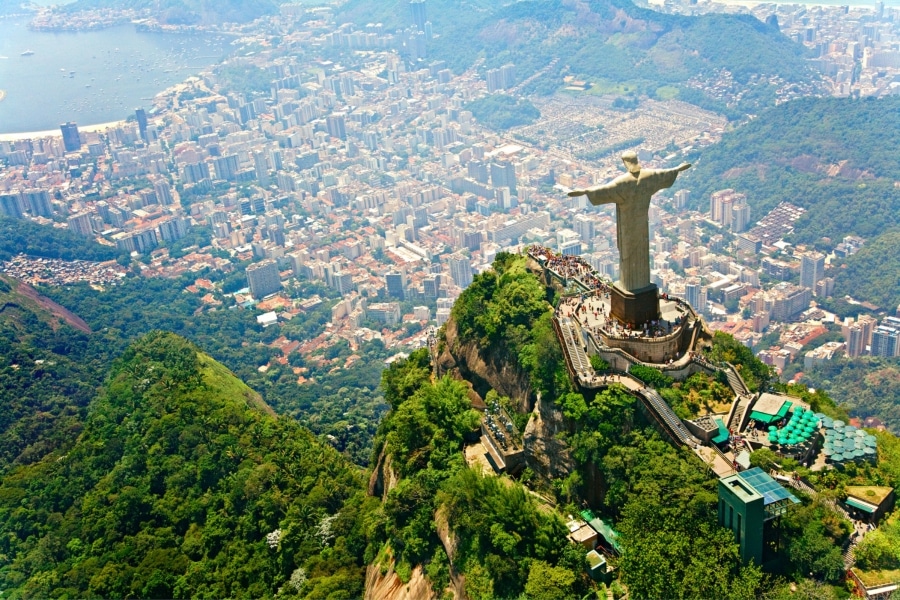
At 38 metres tall, arms outstretched 28 metres wide atop the 700-metre Corcovado mountain, Christ the Redeemer has been watching over Rio de Janeiro since 1931. It is simultaneously a feat of Art Deco engineering, a deeply held religious symbol, and one of the most iconic images in the world.
The views from the summit — over the city, the bays, Sugarloaf Mountain, and the Atlantic beyond — are extraordinary on a clear day. The statue itself is impressive up close in a way that photographs don’t quite capture, and the engineering story behind its construction (the soapstone tiles were each individually shaped and shipped from Portugal) is remarkable.
It’s worth being honest, though: Christ the Redeemer is primarily a viewpoint with a monument attached. The experience is wonderful, but it lacks the historical depth of several others on this list.
Best for: First-time visitors to Rio, photographers, and those with a head for heights.
7. Petra, Jordan
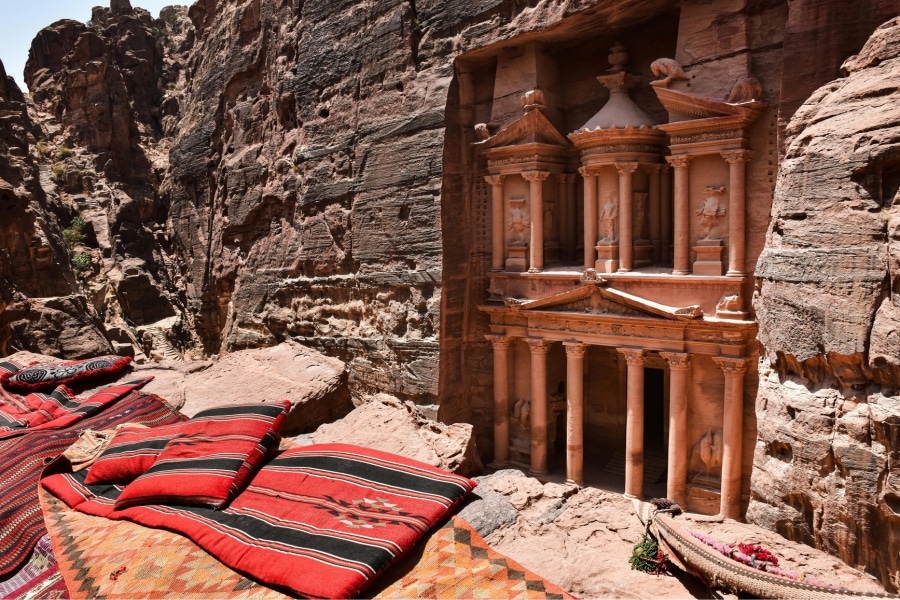
Petra — the ancient Nabataean city carved directly into the rose-red sandstone cliffs of southern Jordan — is one of those very rare places that manages to exceed even the highest expectations. The approach through the Siq, a narrow 1.2-kilometre gorge with walls rising 80 metres on either side, builds the anticipation masterfully. Then, as the gorge narrows to its tightest point, the Treasury appears in a sliver of light — and the effect is nothing short of spectacular.
But the Treasury is just the beginning. Beyond it lies an entire city — the Street of Facades, the Royal Tombs, the Byzantine Church, the Great Temple, and at the far end of the valley, the monastery of Ad Deir, reached by 850 rock-cut steps and rewarding the effort with a façade even larger than the Treasury and views across the desert that stretch for miles.
Petra was the capital of the Nabataean Kingdom, a sophisticated civilisation of traders who controlled the incense routes between Arabia, Egypt and the Mediterranean. At its peak, the city was home to 30,000 people. Today, only around 15% of the site has been excavated — the rest remains buried under the desert.
Jordan itself is a gem — Wadi Rum, the Dead Sea, Aqaba, Jerash — and Petra is its crown.
Best for: Everyone. Genuinely. We haven’t met a person who came away disappointed.
So Which is the Greatest Wonder of Them All?
Every single one of these places deserves its place on the list, and choosing between them is genuinely difficult. Machu Picchu has the drama. The Great Wall has the scale. The Colosseum has the history. The Taj Mahal has the beauty. Chichén Itzá has the mystery. Christ the Redeemer has the view. And Petra has something that’s hard to put into words — a sense of discovery, of stepping into another world entirely.
We’ve shared our thoughts — now we’d love to hear yours. Which of the Seven New Wonders of the World do you think deserves the top spot? Cast your vote below.
We’d love to know your answer — and if you’ve visited any of them, tell us about it in the comments below. And if this list has given you itchy feet, take a look at our small group tours to some of the world’s most remarkable destinations. We can’t promise wonders — but we’ll do our best.
Explore the world differently with Untravelled Paths. Small groups, big experiences and places you won’t find in the brochures.
Written by James Chisnall
The post The 7 New Wonders of the World: Which is the Best? (You Decide) appeared first on Untravelled Paths.
from Untravelled Paths https://blog.untravelledpaths.com/blog/new-wonders-of-the-world-best/

No comments:
Post a Comment