

We know. The news can be a lot. Every time you open a browser, there’s another headline designed to make your stomach drop. So today, we’re doing something different.
We’ve spent time researching, fact-checking, and verifying five stories that genuinely deserve to be celebrated – positive developments for animals, for the planet, and for the future. Every single one of them is real. Every single one of them matters. And all of them have been independently fact-checked, with any nuances noted as honestly as we can.
Here goes.
1. South Korea Has Ended Bear Bile Farming
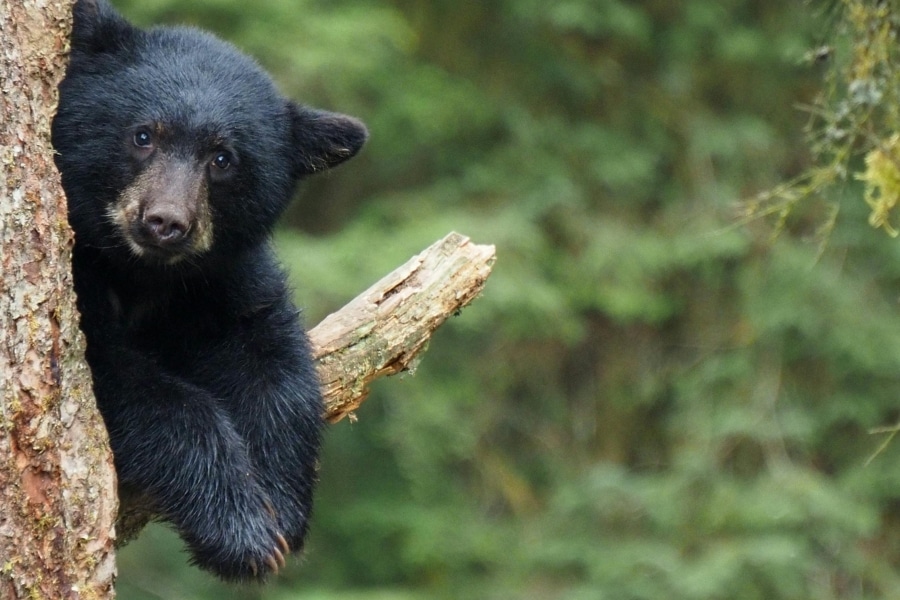
On 1 January 2026, South Korea officially banned the breeding and possession of bears and the extraction of their bile – formally ending an industry that animal welfare organisations had campaigned against for over two decades.
Bear bile farming involved keeping Asiatic black bears (known as moon bears) in tiny cages for the extraction of bile from their gallbladders, used in traditional medicine. The conditions were acknowledged even by regulators to involve prolonged physical and psychological suffering.
The ban was introduced through a revised animal rights protection law, with violations carrying prison sentences of up to five years. The South Korean Ministry of Climate, Energy and Environment confirmed the change, stating: “Our plan to end bear farming is an implementation of our country’s resolve to improve the welfare of wild animals and fulfil our related international responsibility.”
The nuance worth knowing: Approximately 200 bears remain on farms across South Korea while the transition is managed, and animal welfare groups have noted that existing sanctuary capacity is limited. The legal industry has ended, but advocates are rightly continuing to push for faster rehoming of the remaining bears. The campaign isn’t completely finished – but the hardest part is done, and the result of over 20 years of tireless advocacy by organisations including World Animal Protection and Green Korea United.
This is what change looks like.
2. The Ozone Layer Is Steadily Recovering and the Numbers Are Encouraging
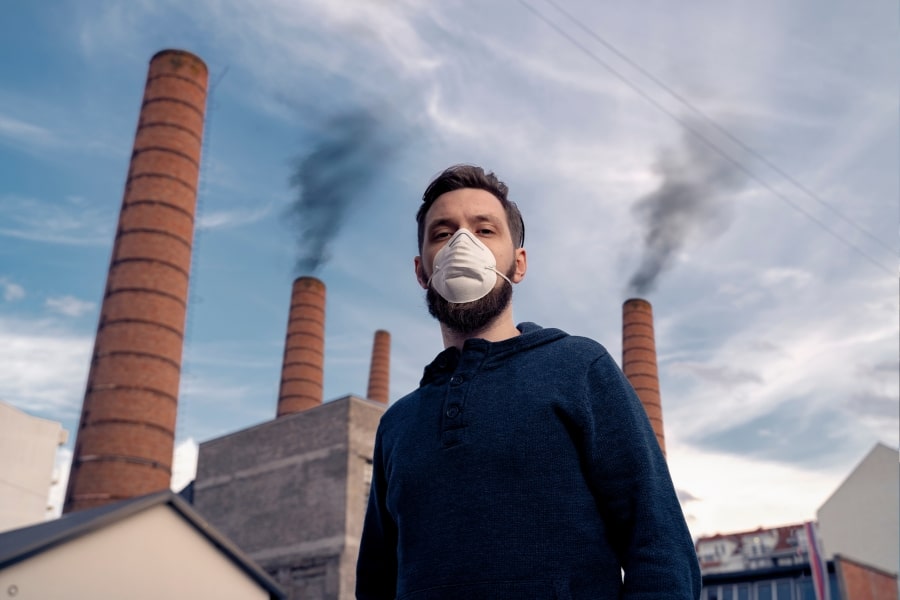
Remember the ozone layer? This might be the original good news story that got forgotten while other crises took the headlines. So let’s revisit it.
Thanks to the 1987 Montreal Protocol — in which countries around the world agreed to phase out ozone-depleting chemicals – the ozone layer has been measurably healing for decades. According to the latest assessments from the UN Environment Programme and the World Meteorological Organisation, recovery is firmly on track. The 2025 Antarctic ozone hole was the fifth smallest since 1992, closed earlier than average, and scientists confirmed it reflects genuine, sustained progress.
The projected recovery timeline, confirmed by UN-backed science: by approximately 2040 for most of the world, by 2045 over the Arctic, and by 2066 over the Antarctic.
The nuance worth knowing: The claim you’ll sometimes see that the ozone layer is recovering “faster than expected” is a slight overstatement – the recovery is broadly in line with scientific predictions, and the 2066 Antarctic timeline was actually pushed back slightly in the 2022 assessment compared to earlier estimates. The honest version is that recovery is steady, consistent, and directly attributable to international cooperation. It’s a remarkable story of what happens when the world agrees on a problem and actually does something about it. A new assessment is due in 2026, which may update the picture further.
The ozone layer is the proof of concept for global environmental action. And right now, it’s working.
3. Mexico Has Written Animal Welfare Into Its Constitution

In December 2024, Mexican President Claudia Sheinbaum signed a landmark reform that amended three articles of the Mexican Constitution to enshrine animal protection as a fundamental value for the first time in the country’s history.
The reforms passed unanimously in both houses of Congress – 450-0 in the Chamber of Deputies, 117-0 in the Senate, and were subsequently ratified by a majority of Mexico’s state legislatures.
The key changes: Article 4 now prohibits the mistreatment of animals and mandates their protection and care. Article 73 empowers Congress to create Mexico’s first nationwide animal welfare law, replacing a patchwork of inconsistent state-level protections. Article 3 requires animal welfare to be included in the national education curriculum, meaning future generations of Mexicans will grow up learning that other species matter.
Animal welfare experts noted that Mexico’s reforms are unusually specific and detailed by global standards. As animal law scholar Kristen Stilt told Vox: “Mexico is different. It’s longer, it’s more specific. It’s in several provisions.”
The nuance worth knowing: The constitutional amendment is the framework, the detailed federal animal welfare law has yet to be drafted and enacted, and campaigners acknowledge that Mexico’s intensive agricultural industry may push back on certain provisions. The reforms are the foundation, not the finished building. But what a foundation.
4. Japanese Scientists Have Created a Plastic That Dissolves in Seawater – Without Leaving Microplastics
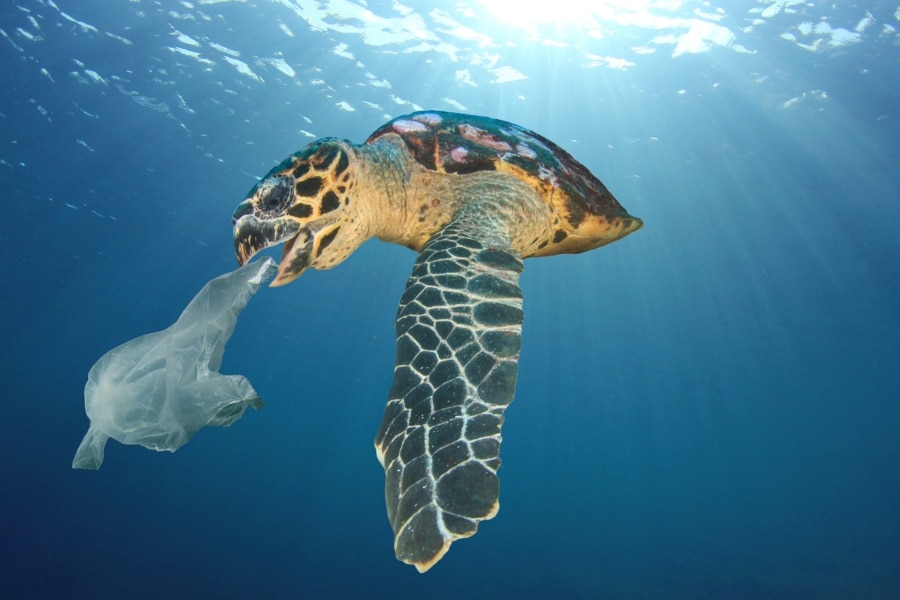
This one genuinely stopped us in our tracks when we first read it.
Researchers led by Dr Takuzo Aida at the RIKEN Centre for Emergent Matter Science in Japan have developed a plant-based plastic made from carboxymethyl cellulose, a biodegradable wood-pulp derivative, that completely dissolves in seawater within approximately two hours, leaving zero microplastic fragments behind. The research was published in the peer-reviewed Journal of the American Chemical Society in late 2025.
The material is strong, flexible, transparent, and can be manufactured using affordable, FDA-approved ingredients mixed in water at room temperature. In lab demonstrations, a bag made from the material, filled with tomatoes, dissolved entirely in artificial seawater within hours. The breakdown products are nitrogen and phosphorus, which microbes can metabolise and plants can absorb.
The same team had developed an earlier version of the plastic last year, but this new iteration uses plant-based ingredients, making it far more practical for real-world manufacturing. The plastic can also be recycled, the dissolved components can be recovered and recombined into the same material.
The nuance worth knowing: This is currently a research breakthrough rather than a commercial product. The laboratory tests used artificial seawater in controlled conditions, and real-world performance at scale, including in open ocean environments, remains to be established. Scaling up production and building the infrastructure for collection and recycling would require significant investment. This is a genuinely exciting proof of concept, not yet a solution sitting on supermarket shelves. But the science is solid, the peer review is done, and the direction of travel is extremely encouraging.
5. Chile Is Completing One of the Largest Wildlife Corridors on Earth
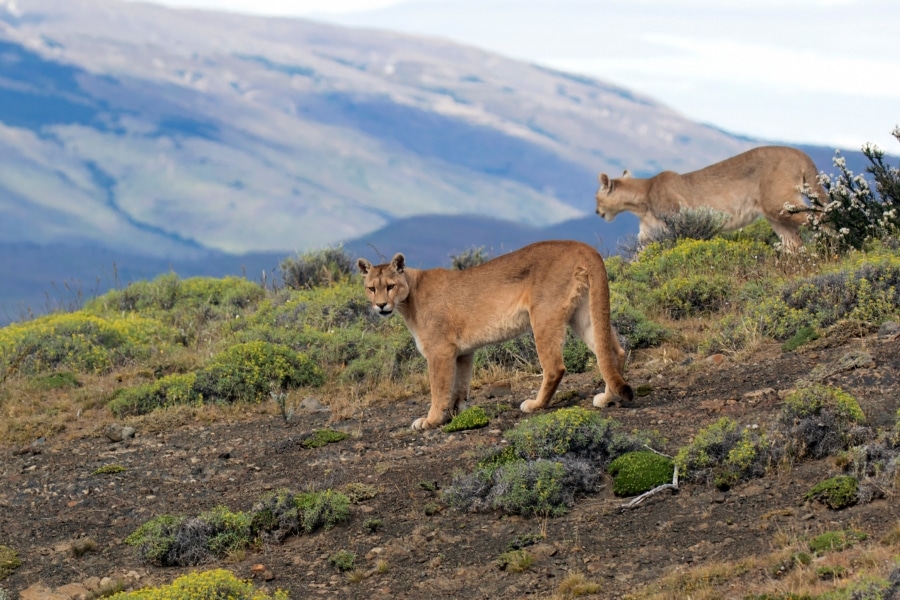
This is a story of extraordinary vision, patient ambition, and what happens when conservation and government work together over decades.
Chile is in the process of establishing its 47th national park, Cape Froward National Park, which will complete a continuous protected wildlife corridor stretching 2,800 kilometres (approximately 1,700 miles) through Patagonia to the southernmost tip of South America. The corridor encompasses 17 national parks and protects more than 11 million hectares of wilderness.
The corridor is the result of a remarkable collaboration between Rewilding Chile (a foundation with roots in the philanthropic work of the late Tompkins Conservation), the Chilean government, and a network of conservation organisations. In one of the largest private land donations in history, Tompkins Conservation gifted nearly a million acres to the Chilean people, which the government matched with millions more acres of newly designated national park land.
The connected corridor allows species including the endangered huemul deer, pumas, and Andean condors to move freely across vast stretches of intact Patagonian wilderness – something that fragmented, isolated protected areas cannot achieve on their own.
The nuance worth knowing: “Building” is a slight overstatement – much of the corridor already exists, and the Cape Froward National Park completes the final piece of a puzzle that has been assembled over many years. The more precise description is that Chile is completing the corridor. The new park itself still awaits a formal decree, though the land donation has been made and the process is well advanced. Either way, the scale of what has been achieved here, and what is about to be finalised, is genuinely extraordinary.
Why We’re Sharing This
At Untravelled Paths, we believe that the world’s wild places are worth protecting, and that travel done well can be part of that protection rather than a threat to it.
That’s why we’re proud partners of the World Land Trust – one of the world’s most respected land conservation organisations, working to protect critically threatened habitats across the globe. With every Untravelled Paths booking, we plant a tree. It’s a small thing, but small things add up and we believe that travel and conservation should go hand in hand.
Stories like the five above remind us why it matters. Bears coming out of cages. An ozone layer healing. A country deciding that animals deserve constitutional protection. Scientists rethinking the very nature of plastic. A 2,800-kilometre corridor of wilderness, stitched together piece by piece.
The world isn’t broken. It’s being fixed – in many places, at once, by people who didn’t give up.
If you’d like to explore some of the wild places worth protecting, we’d love to help you plan the trip.
Sources: World Animal Protection, Euronews, UN Environment Programme, World Meteorological Organization, NASA, NOAA, Animal Legal Defense Fund, Mexico News Daily, Animal Equality, RIKEN Centre for Emergent Matter Science (Journal of the American Chemical Society), The Guardian, Rewilding Chile, Mongabay. All facts have been independently verified. Nuances and caveats are noted throughout.
Written by James Chisnall
The post Five Reasons to Feel Genuinely Hopeful About the World Right Now appeared first on Untravelled Paths.
from Untravelled Paths https://blog.untravelledpaths.com/blog/positive-environmental-news-2026/

No comments:
Post a Comment