
We’ve Just Arrived in the Americas and We’ve Started With Costa Rica!
Something rather exciting has been happening at Untravelled Paths HQ. After years of bringing you extraordinary adventures across Africa, Europe, and Asia, we’ve officially expanded into the Americas. And when it came to choosing our very first destination in this magnificent part of the world, there really was only one contender.
Costa Rica.
Right now, Central and South America represent one of the most compelling regions on the planet for the kind of travel we care about: genuine wildlife, extraordinary landscapes, remarkable biodiversity, and experiences that simply cannot be found anywhere else. The Americas are having a moment, global travellers are waking up to the extraordinary depth and diversity on offer from the rainforests of the Amazon to the peaks of Patagonia. And Costa Rica, that small but staggeringly rich country on the sliver of land connecting two great continents, sits at the very heart of it.
Consider the numbers. Costa Rica covers less than 0.03% of the Earth’s surface, yet it is home to approximately 5% of all the world’s known species. Five per cent. In a country you can drive across in a few hours. More than 500,000 species: birds, mammals, reptiles, amphibians, insects, and marine creatures share this extraordinary place. The government has protected over 26% of its territory as national parks and reserves, making it one of the most ecologically committed nations on earth.
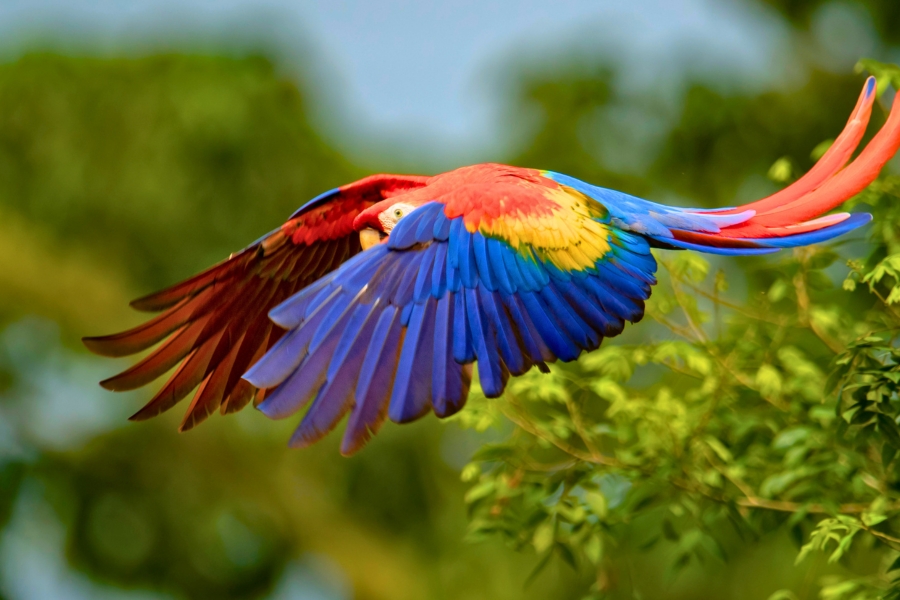
Why now? Because this is still the moment to go. Costa Rica’s wild places remain genuinely wild. The wildlife experiences here are among the most accessible on the planet and you don’t need to trek for weeks to find them. And the country’s extraordinary infrastructure for eco-tourism means you can have adventures that feel remote and genuinely immersive whilst still sleeping well and eating beautifully.
Our brand new Costa Rica adventure takes in five remarkable destinations: the vibrant capital San José, the canal-laced wilderness of Tortuguero, the volcanic landscapes of La Fortuna, the surf-washed Pacific coast of Tamarindo, and the legendary cloud forests of Monteverde. Each one is extraordinary in its own way. Together, they tell the story of one of the most biodiverse places on earth.
Here’s what awaits you.
San José: Your Gateway to the Wild

First impressions matter, and San José delivers. Costa Rica’s capital is a vibrant, energetic city that serves as the perfect introduction to this remarkable country — a place to absorb the culture, eat extraordinarily well, and begin to understand the nature that surrounds it on every side.
The city sits in the Central Valley, ringed by volcanoes and draped in a spring-like climate year-round. It is a city of colour, noise, flavour, and genuine warmth. The covered Mercado Central bustles with life; the Teatro Nacional, an extraordinary piece of 19th-century European architecture transplanted into the tropics, stands in elegant contrast to the mountains in the distance; and the neighbourhoods of Barrio Amón and Barrio Otoya reveal a colonial past in their ornate facades and tree-lined streets.
But San José is also a wildlife destination in its own right. The city’s butterfly gardens and wildlife rescue centres introduce you to the animals you’ll encounter throughout the trip; sloths, toucans, iridescent morpho butterflies, and more. The nearby Braulio Carrillo National Park, a vast cloud forest reserve just 30 minutes from the city, offers a first glimpse of the extraordinary ecosystems that make Costa Rica so special.
Arriving in San José is the moment the adventure begins. By the time you leave for Tortuguero, you’ll already be hooked.
Tortuguero: Costa Rica’s Little Amazon
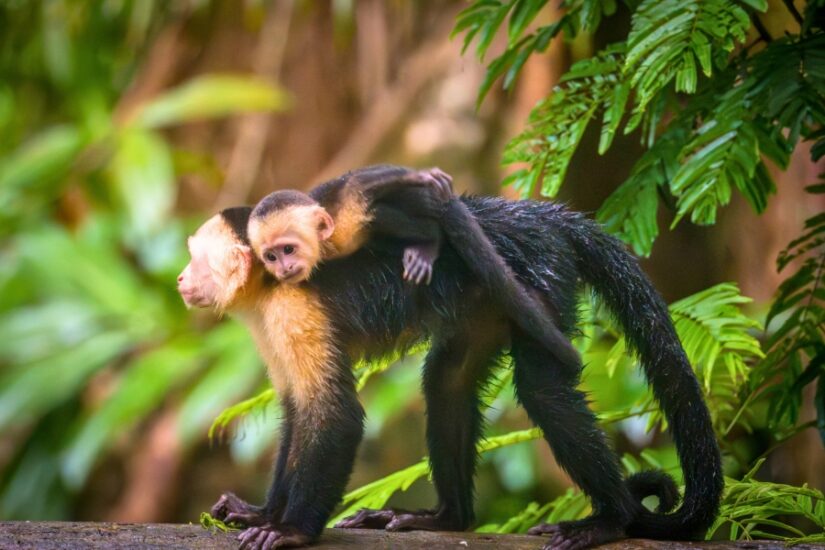
There are no roads into Tortuguero. To reach it, you travel by boat through a network of canals, channels, and jungle waterways that wind through one of the most biodiverse landscapes in Central America. And that journey, gliding past towering trees draped in epiphytes, watching caimans on sunlit banks and herons standing motionless in the shallows, is itself one of the great wildlife experiences of the trip.
Tortuguero, whose name translates simply as “region of turtles”, is a narrow sandbar village on Costa Rica’s northeastern Caribbean coast, enveloped by nearly 200,000 acres of protected jungle, rainforest, swamps, and lagoon. The national park is home to 138 mammal species, 442 bird species, 118 reptile species, and 58 amphibian species, packed into a labyrinth of habitats that earned it the nickname “Costa Rica’s Little Amazon.”
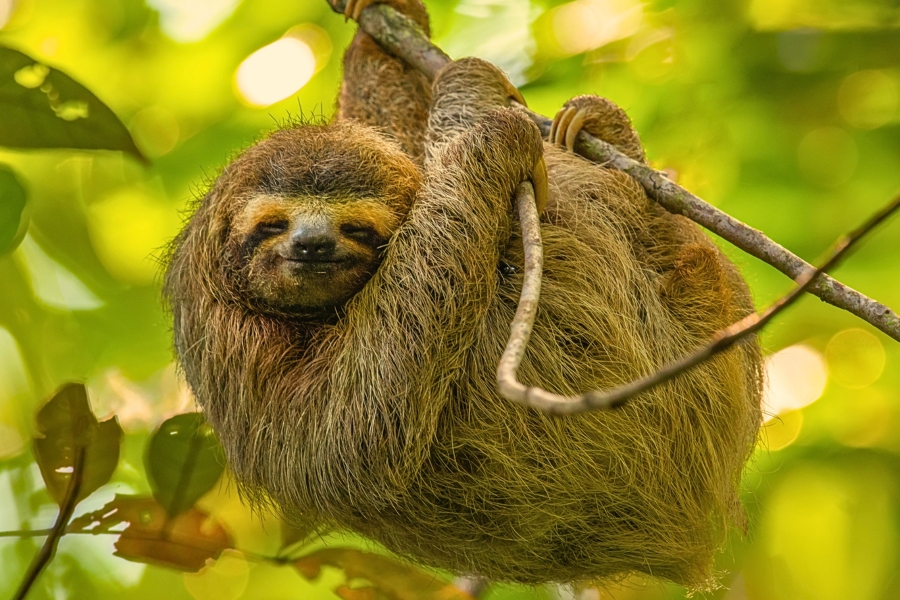
On early morning canal boat tours, you drift beneath the canopy as the forest wakes around you. All three of Costa Rica’s monkey species; howler, spider, and white-faced capuchin move through the treetops above. Three-toed sloths hang in improbable positions from the branches. Spectacled caimans glare from the water’s surface. The basilisk lizard, nicknamed the “Jesus Christ lizard” for its extraordinary ability to sprint across the surface of the water and vanishes before you can properly register what you’ve seen. Toucans and green macaws call from somewhere in the canopy.
And then there are the turtles.
Tortuguero is one of the most important green sea turtle nesting sites in the entire Western Hemisphere. Between June and October, approximately 22,000 green sea turtles haul themselves up these beaches to lay their eggs in the sand. Witnessing this at night and standing quietly on the dark beach as a massive, ancient creature emerges from the surf and begins the slow, determined process of securing the next generation, is one of the most profoundly moving wildlife experiences available anywhere on earth. Leatherback and hawksbill turtles also nest here, and the conservation work of the Sea Turtle Conservancy, which has been studying and protecting these animals since 1959, means that every night tour contributes directly to their survival.
Tortuguero is also one of the few places in Costa Rica where jaguars patrol regularly, particularly during turtle nesting season when eggs and hatchlings provide easy meals. Camera traps regularly confirm their presence. Sightings are rare, but knowing they are out there in the darkness adds a genuine, thrilling wildness to the experience.
La Fortuna: In the Shadow of a Volcano
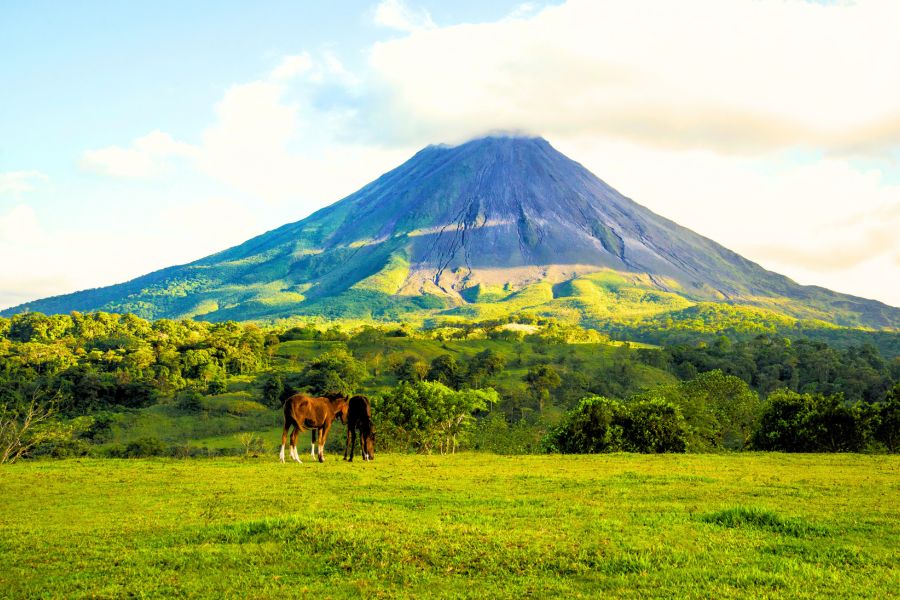
The perfectly conical peak of Arenal Volcano is one of the most beautiful and iconic sights in all of Costa Rica. Rising to 1,670 metres above the lush Northern Highlands, Arenal dominates the landscape from every angle, appearing and disappearing behind clouds, catching the light in ways that shift from moment to moment throughout the day. It is one of those rare natural landmarks that genuinely earns the word “majestic.”
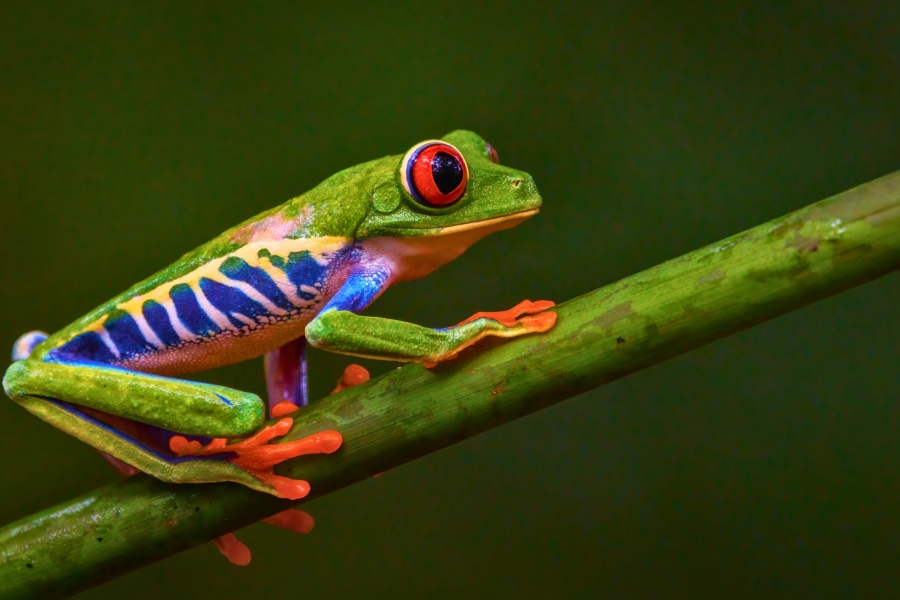
La Fortuna, the small but lively town at Arenal’s eastern foot, is the adventure capital of Costa Rica. The surrounding landscape offers extraordinary wildlife alongside an almost comically comprehensive list of activities: hanging bridges through the rainforest canopy, night walks to find red-eyed tree frogs and kinkajous, river safaris along the Río Peñas Blancas, waterfall hikes, kayaking on Lake Arenal, and at the end of it all, soaking in geothermally heated hot springs under a sky full of tropical stars.
The wildlife around La Fortuna is exceptional. The hanging bridges of Mistico Park take you through primary rainforest at canopy level, where toucans and monkeys move through the trees at eye level and the perspectives on the forest are unlike anything you get from the ground. Night walks reveal the extraordinary nocturnal world of the cloud forest: red-eyed tree frogs (one of the most photographed creatures in Costa Rica, for very good reason) perched on leaves, sleeping sloths, fer-de-lance vipers, and the extraordinary sounds of insects and amphibians that form the rainforest’s night-time soundtrack.
The river safaris along the Río Peñas Blancas offer some of the finest wildlife watching in the region from the water. Caimans, river otters, Jesus Christ lizards, and a dazzling variety of bird species; including kingfishers, herons, anhingas, and the occasional osprey, make every journey down the river a new discovery. Howler monkeys announce themselves long before you see them, their extraordinary calls rolling through the trees like something out of prehistory.
And then, as the day winds down, you lower yourself into a pool of thermal water heated by the volcano beneath your feet, and Costa Rica delivers one of its quieter but equally extraordinary pleasures.
Tamarindo: Pacific Sunsets and Sea Turtles by Moonlight
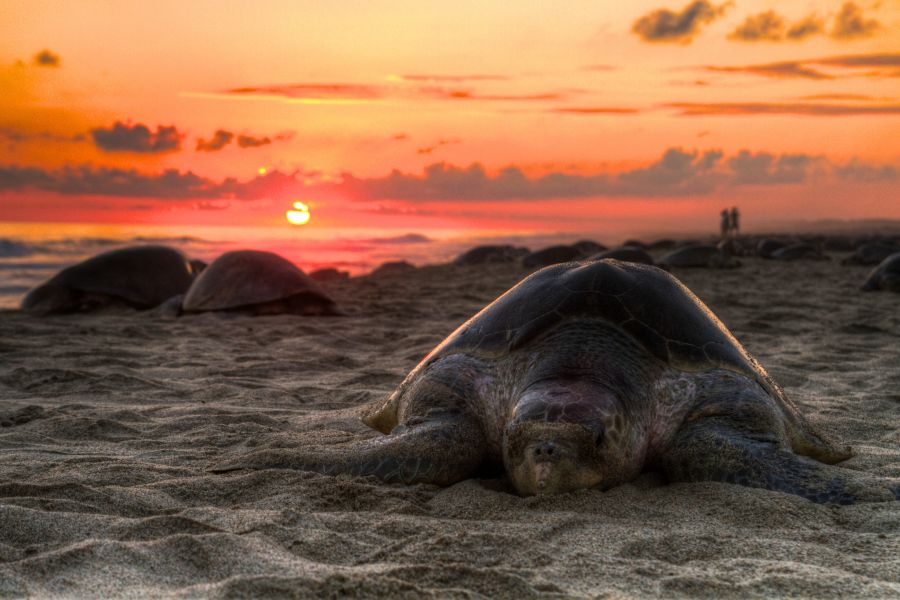
Tamarindo is where the jungle meets the Pacific Ocean, and the result is one of the most beautiful and beguiling coastlines imaginable. A lively, surf-oriented town on the Guanacaste coast, Tamarindo sits within the Guanacaste province’s extraordinary tropical dry forest ecosystem, a landscape that is drier and more open than Costa Rica’s Caribbean and highland forests, but every bit as rich in wildlife.
The beaches here are legendary for surfing, and the warm, consistent waves of the Pacific attract learners and experienced surfers alike. But wildlife enthusiasts will find equal reason to fall in love with this stretch of coast.
Just north of Tamarindo lies Playa Grande, part of the Las Baulas National Marine Park, one of the most important leatherback sea turtle nesting sites on the Pacific coast of the Americas. The world’s largest sea turtle, leatherbacks can grow to over two metres in length and weigh as much as 900 kilograms. Watching one haul herself up the beach in the darkness, leaving tracks as wide as tyre treads in the sand, is an experience that stays with you permanently. Olive ridley sea turtles also nest along the nearby beaches, and guided night tours, strictly regulated to protect the animals and take small groups to witness the nesting with minimal disturbance.
The estuary at Tamarindo is a wildlife spectacle all of its own. Boat tours through the mangrove channels reveal American crocodiles lazing on sunlit banks (entirely ignoring the boats), howler monkeys crashing through the canopy overhead, herons and egrets fishing the shallows, and magnificent frigatebirds circling high above with wingspans of up to two metres. In the surf itself, brown pelicans dive-bomb the breaking waves in search of fish and one of those small, daily spectacles of the Costa Rican Pacific coast that you never quite get used to, however many times you see it.
Out on the water during snorkelling excursions to the Catalina Islands, you might find yourself sharing the sea with giant manta rays and sea turtles surfacing for air among the waves. The marine biodiversity of this coast is as extraordinary as anything on land.
Tamarindo is also a wonderful place simply to be. The sunsets here are staggering, vast, warm, photographic events that colour the sky over the Pacific in shades of orange and pink that seem almost impossibly vivid. After a day of wildlife and adventure, there are few finer places to watch the day end.
Monteverde: Where the Mist Holds Miracles
The road to Monteverde climbs steeply through the mountains, the air growing cooler and damper as you ascend, until suddenly the lowland heat is behind you and you are somewhere else entirely. Somewhere quieter, greener, and stranger. Somewhere that smells of moss and wet earth and something indefinable that is the cloud forest announcing itself.
Monteverde is one of the most celebrated natural destinations in Costa Rica, a high-altitude cloud forest that protects one of the most intact and biodiverse ecosystems on the planet. Less than 0.26% of the earth’s land surface is covered by tropical cloud forest. Monteverde is one of the finest examples that remains. The mist that clings to the canopy here is not just atmospheric, it is functional, feeding the forest directly through the leaves and sustaining entire watersheds across Costa Rica.
The biodiversity within the reserve is extraordinary: over 100 species of mammals, more than 400 species of birds, 120 types of amphibians and reptiles, and 420 species of orchids have been recorded here. Spider monkeys, howler monkeys, agoutis, and two-toed sloths move through the forest, and the night walks reveal a world of armadillos, tarantulas, and the extraordinary Hoffman’s Two-toed Sloth rustling in the canopy above.
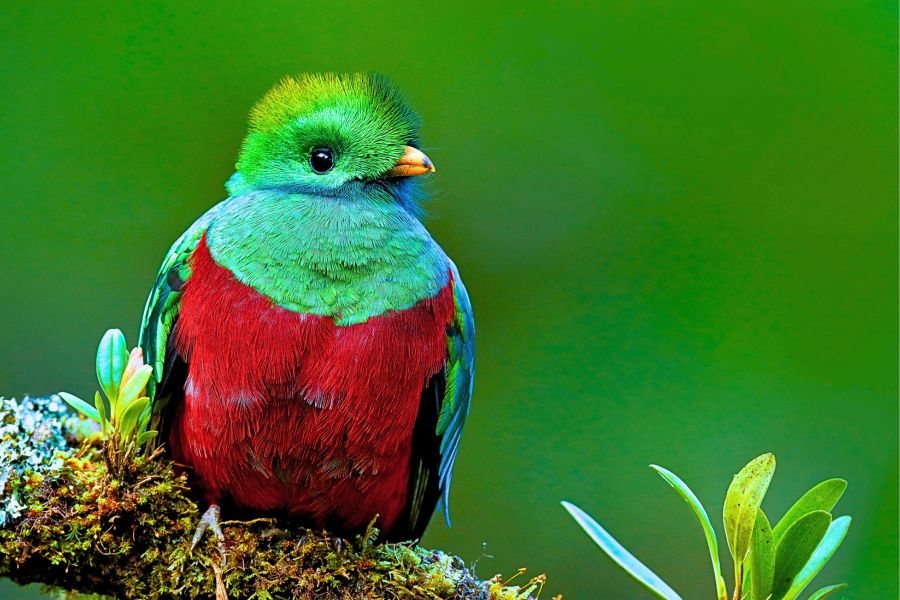
But there is one creature that draws travellers to Monteverde from the farthest corners of the earth: the Resplendent Quetzal.
The quetzal was sacred to the Maya and the Aztecs, who used its tail feathers, which can grow to a full metre in length on the males in the headdresses of kings and priests. Today it is considered one of the most beautiful birds on earth, its iridescent emerald body and brilliant crimson breast making it almost impossible to believe it’s real. Spotting one in the mist-draped canopy of the Monteverde cloud forest, guided by a naturalist who knows exactly where to listen for its call and which fruiting wild avocado trees it favours, is one of those wildlife moments that travellers describe in awed, quiet terms for years afterwards.
The hanging bridges of Monteverde are extraordinary in their own right, elevated walkways that take you through the forest at canopy height, offering perspectives on the ecosystem that ground-level hiking simply cannot deliver. And the zip-lines, which send you flying above the forest canopy with the cloud forest stretching in every direction below, manage to be both an adrenaline experience and one of the finest views in Costa Rica simultaneously.
Monteverde is where the trip ends. It is also, many of our guests tell us, where they decide they need to come back.
The Best Time to Visit
Costa Rica has two distinct seasons: the dry season (December to April) and the green season (May to November). Both have their charms, but for wildlife, the seasons each offer different rewards. Sea turtle nesting in Tortuguero peaks between July and October. Quetzal sightings in Monteverde are best between January and May. The dry season offers clearer skies and easier travel, while the green season brings lush landscapes, fewer crowds, and the extraordinary spectacle of the rains arriving each afternoon like clockwork.
We offer departures across the year and will always advise you on the best timing for your particular interests. Whatever time you choose, Costa Rica will not disappoint.
Ready to Step Into the Wild?
This is our first Costa Rica adventure, and we are very proud of it. Every destination, every lodge, every guide has been chosen with the same care and attention that we bring to all of our Untravelled Paths experiences.
If Costa Rica has been on your list, and it really should be, there has never been a better time to go. We’d love to tell you more about the trip, walk you through the itinerary, and help you understand whether this is the adventure for you.
Get in touch with us today to find out more or to start planning your trip. And if you’d like to have a proper conversation about the experience, we’d be delighted to schedule a Zoom call with one of our team, just let us know and we’ll find a time that works for you.
Pura vida, as the Costa Ricans say. It translates as “pure life.” Spend two weeks in this country and you’ll understand exactly what they mean.
Written by Jackson Cornish
The post Stepping Into the Wild: Costa Rica’s Most Extraordinary Wildlife Experiences appeared first on Untravelled Paths.
from Untravelled Paths https://blog.untravelledpaths.com/blog/costa-rica-wildlife-adventure-untravelled-paths/

No comments:
Post a Comment